 Save
Save The first time I encountered dandelion jelly I was midway through cleaning out my garden beds, armed with a basket for weeds and no grand culinary plans. The scent of fresh grass mixed with the oddly sweet aroma of dandelion petals that kept drifting toward me & I couldn't help but wonder if I was missing out by simply tossing them away. Later, curiosity got the best of me & I found myself gently separating the golden petals while my favorite playlist hummed in the background. Dandelion jelly felt like a quiet celebration of spring's persistence & a nod to those wild corners of our yards. You quickly learn that what might seem ordinary can turn extraordinary with a little kitchen magic.
I once made this jelly for a small group of friends gathered outside on a breezy afternoon, picnic style, when the sun had just started warming the grass. We laughed at how the jar looked so cheerful next to plain butter, & someone guessed the flavor was honey, not dandelion. The jelly quickly became centerpiece conversation, everyone dipping spoons & marveling at how a yard staple could transform into something so luscious. There was a moment of silence as a friend tasted her first bite & just smiled, savoring that gentle floral sweetness. It gave our light lunch an unexpected sense of togetherness.
Ingredients
- Dandelion Petals: Choose only the bright yellow petals, avoid any green bits (they add bitterness), & always harvest from clean, pesticide-free areas.
- Water: Use filtered or spring water for steeping to let the dandelion flavor shine—tap water can add unexpected flavors.
- Lemon Juice: This bit of acidity lifts the jelly's flavor & gives a hint of citrus--sometimes, I squeeze in a touch more for brightness.
- Powdered Fruit Pectin: Essential for setting the jelly, I've learned to check the expiry date since old pectin can ruin the batch.
- Granulated Sugar: Sweetens & creates jelly texture, but also balances the earthy notes from the petals—you'll want the full amount for best results.
Tired of Takeout? 🥡
Get 10 meals you can make faster than delivery arrives. Seriously.
One email. No spam. Unsubscribe anytime.
Instructions
- Gather & Prepare Petals:
- Start by rinsing your dandelion blossoms gently under cool water, shaking out any tiny bugs & bits of dirt. Pinch off the yellow petals with your fingers, avoiding green bases (they taste bitter), & pile them up until you have a generous mound.
- Steep for Flavor:
- Bring water to a boil, then add the petals & remove from heat; cover the pot & leave it to steep for at least four hours or overnight—the kitchen smells faintly herbal, sweet & alive. Once steeped, strain the petals well, pressing out every drop for maximum flavor & set aside your golden dandelion tea.
- Mix & Cook Jelly:
- Pour the strained dandelion tea into a large saucepan, stir in lemon juice & pectin, then heat until it's a lively rolling boil. Add sugar all at once, keep stirring as it comes back up to a hard boil—boil for one to two minutes, then take it off the heat & skim any foam for a glossy finish.
- Jar & Seal:
- Ladle the hot jelly into sterilized jars, leaving a small gap at the top; wipe rims clean, add lids & close tightly. For long-lasting jelly, process jars in a boiling water bath for five minutes (or cool & refrigerate if eating soon).
 Save
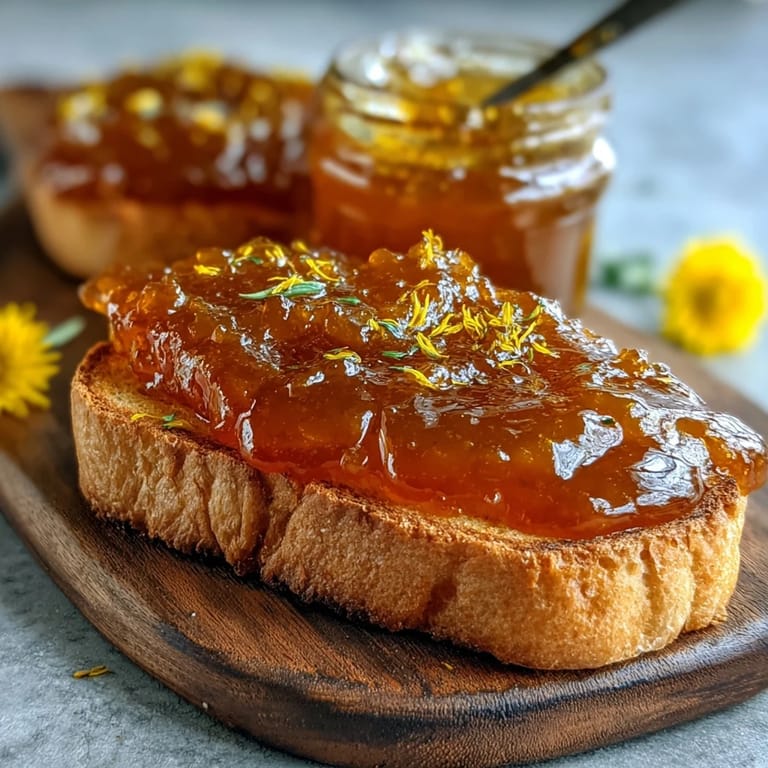
Save Sharing this jelly with my mother made the kitchen feel warmer & more connected, as she recounted her own childhood foraging stories. She marveled at how homemade preserves highlight the flavors we often overlook, & every conversation became richer with a spoonful of floral sweetness.
Making the Most of Wild Ingredients
Collecting dandelion petals is oddly meditative, a quiet, repetitive task best done in the morning when blossoms are at their brightest. I like to check each petal carefully, knowing that skipping the green base really does make a difference in taste. If you invite a child or friend to help, you'll end up chatting about everything from garden bugs to favorite jams. The process feels more joyful when shared with others. Wild ingredients demand a bit more patience but reward you with flavors supermarket jars can't match.
How to Ensure a Perfect Jelly Set
My jelly didn’t always set perfectly on the first try—a few batches stayed loose until I figured out how important a hard boil is with pectin. You’ll hear a distinct gurgle when the boiling becomes vigorous enough. If you’re worried, popping a spoonful onto a cold plate for a quick chill tells you if it’s setting. Waiting can feel uncertain, but usually, the jelly settles beautifully with patience. Be ready to reboil if needed, but more times than not, it works the first go.
Bright Ideas for Serving & Storing
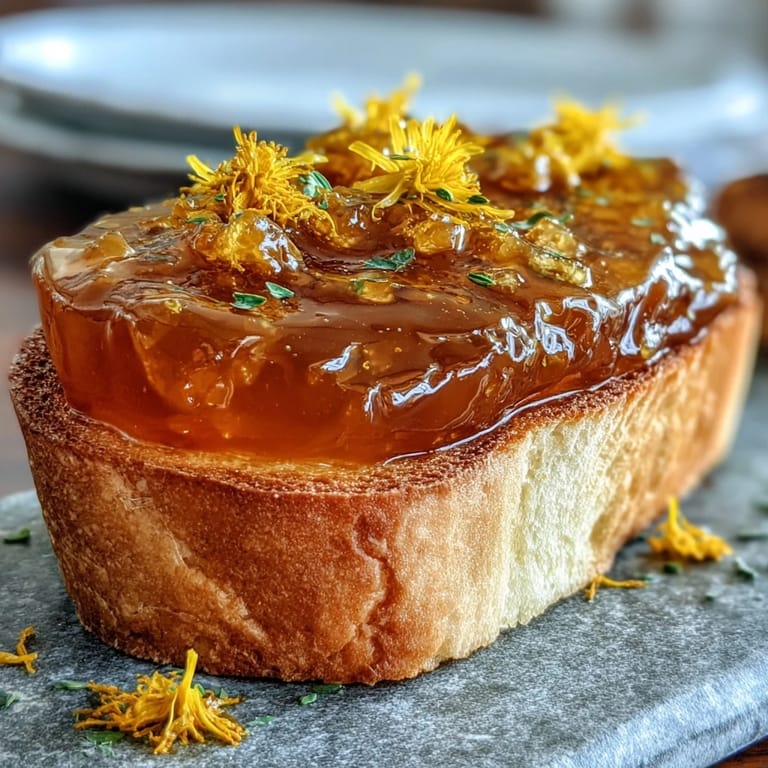
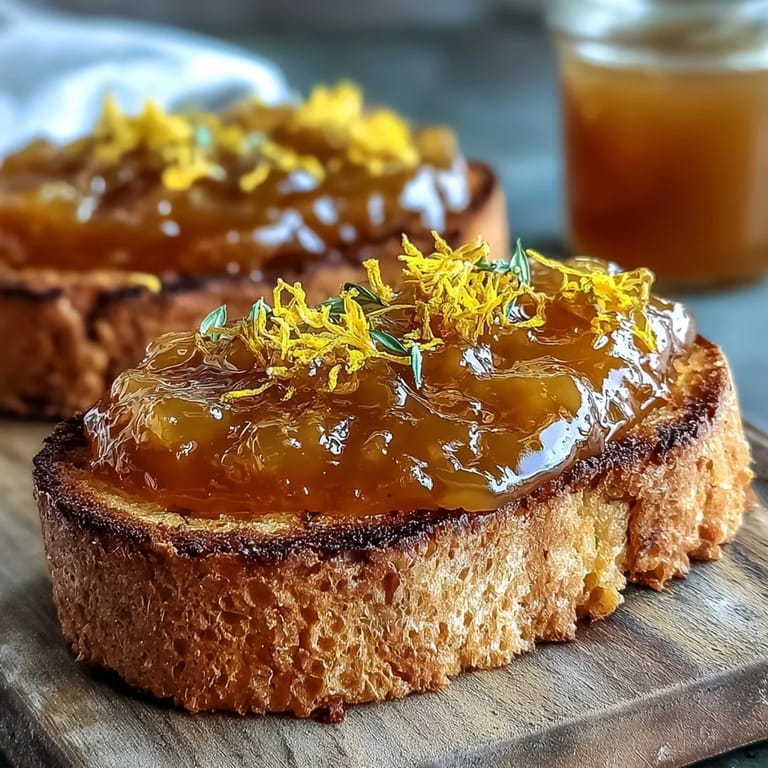
Once cooled, dandelion jelly gleams like golden sunshine & tastes even better after a day or two. Spread it on warm toast, swirl into yogurt, or spoon atop vanilla ice cream for a floral accent that’s never too sweet. Store jars in a cool place & always check lids for a proper seal before gifting. It’s fun to decorate jars with a flower or ribbon, especially for spring celebrations.
- Try pairing the jelly with tangy cheeses—it's a magical combo.
- Refrigerate open jars, they last for several weeks if sealed well.
- Remember, taste improves a day after making, so exercise a bit of patience.
 Save
Save Making dandelion jelly brings a little sunshine into the kitchen, no matter the weather outside. Let each batch remind you to savor the simple, unexpected joys found in everyday ingredients.
Recipe Questions
- → Can I use any dandelions for the jelly?
Use pesticide-free, freshly gathered dandelion petals from clean, untreated areas to ensure safety and flavor.
- → How do I avoid bitterness in the jelly?
Pinch off only the yellow petals, minimizing any green parts, which helps keep the finished jelly delicately sweet.
- → Can I add other flavors to the jelly?
For a twist, incorporate orange zest with the lemon juice to give a citrusy aroma and taste.
- → What equipment is needed for making jelly?
You need a large saucepan, mesh sieve or cheesecloth, sterilized jars and lids, a ladle, and optionally a jar funnel for easy filling.
- → How do I know the jelly is set?
Jelly sets as it cools. If it remains runny after 24 hours, it can be reboiled with more pectin for improved texture.
- → Is the jelly suitable for vegetarians and gluten-free diets?
Yes, this jelly contains only plant-based, naturally gluten-free ingredients. Check labels if highly sensitive.